Tuesday, October 18, 2011

Served!


I'm ready to serve, or be served.

How words evolve is fascinating. Web 2.0 brings its own language, and learning some of it has improved my information literacy skills.

I've taste-tested the project recipes and added some extra ingredients. Hope it tastes good!

(Everything is listed in order on the right hand side.)

Monday, October 10, 2011

What's Cooking?

Ingredients added to my blog
  1. Video bar While using YouTube to upload a video of a friend describing the historical meal he had recently made, I found videos of medieval music and images and made a playlist which can be screened at the breakfast to add to the atmosphere. Samples are in the bar.
  2. Blog list Links to useful related blogs.
  3. RSS feeds from useful related blogs.
  4. Podcast of an author talking about her book on the history of cake.
  5. Links to images and more videos The ones from the National Library of France are excellent, with information on food, cooking and meals. Medieval Helpdesk is thrown in for a laugh. The King's Cookbook videos are found on a wiki associated with the International School of Central Switzerland.
  6. Widget of the LibraryThing books about medieval food. (They are working on fixing the RSS feed.)
  7. RSS feed of medieval food books from the British Library (because my local library search feed did not work).((Now this has disappeared! -12/10/11))
Missing Ingredients
  1. Upload to Flickr (I'm thinking I'll take photos of the ingredients for frumenty.)
  2. Flickr mashups and 3rd party sites (I have played with these, but need to make something relevant?)
Accompaniments
  1. Newsreader account has been set up to get RSS feeds from the blogs I follow.
  2. Rollyo I have made a searchroll to help my research.
  3. Delicious My 'stacks' list helpful sites I have bookmarked and tagged. One stack is 'Medieval food ware' which contains images from WorldImages; the other 'Historical foods - medieval'.


Saturday, September 24, 2011

Project, Interrupted

Thought Recorder

It's strange how inspiration strikes at 4 am and amazing how quickly it disappears. By the time I got up, sorted scrap paper to write on, realised I was hungry, got myself breakfast, tidied a book shelf (procrastinating again) and found its warping is warping my books, I had forgotten those ideas and words which flowed so freely in my brain the instant I'd woken.

Often I've thought how great it would be to be able to video-record my dreams, which I remember vaguely for only half a minute when I wake. Then I could 'dream' them again, consciously.

I also want a thought recorder/player built into my brain!

Pressure to Perform

My project has been put on hold because I have real work; that is, putting theory into practice (or trying to). When the pressure is on, though, theory somehow disappears. Yet that theory is so vital to performing well in the job and can only be integrated into practice by practising! What would be useful, then, is a workplace not without pressure, but where THEORY ABOUNDS. How could this be?

One way is for my brain's thought recorder/player to play back the relevant theory inside my head as I perform a certain task. For example, when I'm asked if we have any Tom Brennan books, the theory message I would get is to not assume anything, least of all that Brennan is an author of fiction! This would save a whole lot of embarrassment! When sorting books to shelve, I would be reminded to sort non-fiction numerically in the first instance, then alphabetically - not the other way around! (I put it down to pressure to perform.)

Until thought recorders/generators are invented, a library which is a school would be helpful. Students work where their teachers work. The teachers help make the connections between theory and practice (not to mention forgive the students' mistakes).

A library-school would benefit not only the students; teachers would be able to continue their library practice.

Project Development

Out of the 47 things that make my project, I have completed nine. Now I'll need to do two things a day to finish in time. (Seven things are incorporated into a 2,000 word report.) Besides everything else.

How much more pressure to perform can I take?

How determined am I?

Sunday, September 4, 2011

Twittery

Excuse me if I get my terms wrong here - I'm learning a new language!

I tweeted every day in August. Sorry, I lie. Every day bar one. I had a Twitter-free day because I felt addiction coming on.

What did I learn from Twitter? Much. I share the following shortened list:
  1. What to do with all this information? Once I started following the other people taking the Twitter challenge from ALIA, they fed me so much - links to blogs, interesting websites, experts in the field, slideshares, videos, more people to follow, technologies to learn about - it felt like information overload. I had to get serious about managing it. Exactly what information do I want? Who's going to give the best? (librarians, lecturers and other professionals?) What do I do with it? (sort and save in bookmarks?)
  2. How to shorten a URL and why would I want to? In order to share a website link in a tweet, it's best to shorten it so it doesn't take too many characters away from the allowable 140 per tweet. Otherwise I would not be able to say much else. I found bit.ly useful.
  3. Be a fly on the wall at a conference. I read about a 'New Literacies' conference being held. I searched on Twitter for one of the speakers, and found the hashtag #UTASNewLits to follow. People at the conference tweeted as it went, so I knew some of the content. It will be interesting to do the same with the Perth ALIA conferences.
  4. QR codes and other mysteries. I know there are sources other than Twitter to find out the latest technologies, but following libraries on Twitter is one way of finding out how they use them. I still have lots of things to get my head around - like 'meme', 'Tweetdeck', 'Jing', 'Storify' and how to share mobile photos. One day...
  5. Twitter as search tool? Yes. I'm finding sources and resources for the food history event, for example.
  6. Serendipity happens on Twitter too! I found several very helpful things, both for study and personal use, at just the right time; e.g. the UN library website, an article on information overload (thanks @katiedatwork), an encouraging quote (thanks @BearGrylls).
Twitter is useful - libraries should embrace it. (See Phil Bradley's resource guide.) I'd encourage non-users to have a go. Just being aware of Twitter is not enough to understand its potential.

Twitter has a culture of
its own.

Sunday, August 21, 2011

47 Things

I am using this blog to regularly comment on the development of a study project which aims to showcase my ability to research, analyse and communicate information, ideas and concepts.

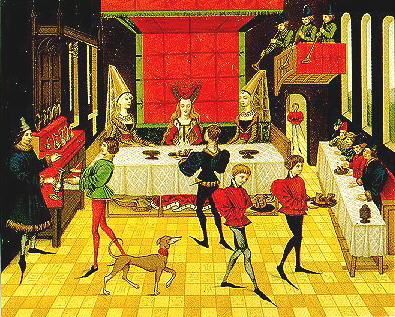
The context of the project is a networking breakfast developed around historical foods from a range of past cultures. It will be hosted by Library and Museum Technology students and supported by a range of emerging technologies.

It’s all about demonstrating my understanding and ability to apply my information literacy skills.

And it’s big! Thinking about what the project will look like (including an evaluation of my work and skills, with a reflection on my information literacy skills), I counted 47 elements that make up the assessment. That means if I do one each day from today, I shouldn’t have to ask for an extension!

In order to keep on track I need to keep in mind the focus of the event: the guests! How can I best meet their information needs? Which technologies are the most useful to engage the guests before, during and after the event?

Speaking of technologies, I am embarking on a steep learning curve. Sure, I already use Delicious and Facebook, have uploaded a few photos to Flickr, share documents in the ‘cloud’, receive several RSS feeds into my email, follow blogs, watch YouTube and listen to radio podcasts, but any other Web 2.0 technology is new to me.

So…when I read this from ALIA, ‘Take the challenge to tweet once a day for a month! If you don’t think you can manage this - don’t despair – just try your best and get involved! If you haven’t used Twitter before this is your chance to give it a go and see what all the fuss is about!’ I decided to take the challenge…
Sunday, August 14, 2011

Anxiety of being a digital immigrant

Immigration has its anxieties.

There is no-one you know in the new country to welcome you with open arms and a warm embrace. You don't know the language or how things work. Then there's the problem of finding a job.

It's the stuff of bad dreams. (Does anyone own the user name 'yool' with the password 'essence'? I woke up in the early hours with that one!) So much time is spent exploring the newness of things that I forget to eat - a good way to lose weight!

I get dizzy from all the connections - talk about information overload!

I hope Eric Berlow is right when he says that complexity leads to simplicity!

Tuesday, July 19, 2011

Me Vs Wild

There's only one way out of here, and that's to keep moving!

I've been dropped alone into the wild land that is Polytechnic. It’s a test of survival. There are no trails to follow, let alone signposts. It’s all up to me, but nothing looks or sounds familiar. Will I find the resources I need? Which direction should I take? What are my priorities? Am I strong enough to survive? My mind starts to play tricks on me. Why did I sign up for this?

I find out that I’m not alone. There are others like me, feeling lost and helpless. However, there’s also the ‘crew’ to guide and cheer us on. In my weak state I seek out whatever it takes to get me through: words of praise, a listening ear, a hug. Encouraging words, ‘You can do it, woman!’ along with a friendly punch on the shoulder. Positive people sharing jokes, smiles, cream cakes and chocolates!

Learning is tough work!

I’m alive. Fully. And on a journey – discovering, relying on and managing myself. Not without help.

Bear Grylls and I have something in common.